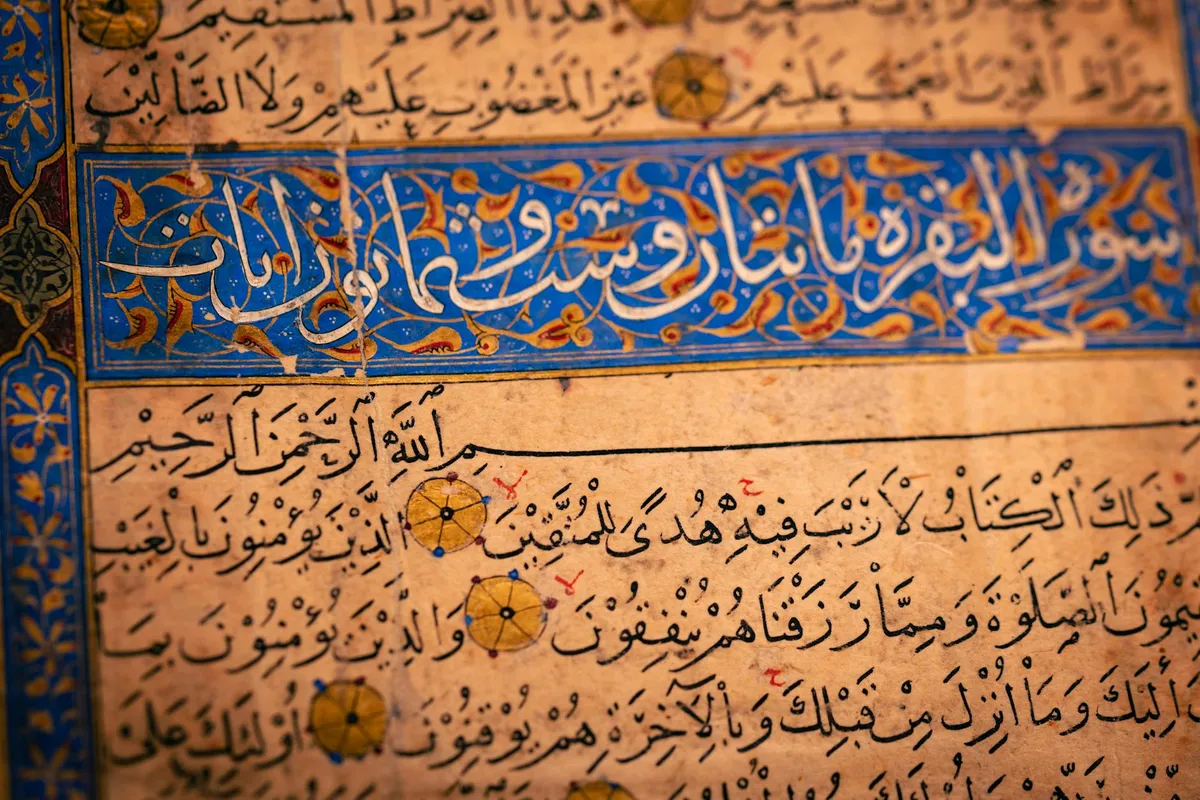
Persian mourning poetry (marsiya) developed across centuries as a distinctive literary tradition serving Shia devotional life. The tradition includes some of the most-significant Persian poetic works and continues to be composed and recited in contemporary Shia communities. This article analyzes the major poets, the conventions of the form, and the tradition's contribution to lived religion.
The form and conventions
Persian marsiya is structured around the Karbala narrative — the events of 680 CE in which Hussein ibn Ali was killed along with his family and companions. The narrative provides the standard subject matter; poets approach it through various literary strategies and emphases.
Common conventions of the form:
- Direct narration of Karbala events with dramatic emphasis on key moments — the thirst of the family before the battle, individual martyrdoms, the captivity that followed.
- Direct address to Hussein and other figures — speaking to the Imam, expressing grief, sometimes asking intercession.
- Identification of the speaker (and audience) with mourning roles — the poetry positions speaker and listener as participants in collective mourning.
- Emphasis on specific images — Hussein's baby Ali Asghar, the horse Zuljana returning without rider, the captive women, the head separated from body. Specific images recur across many poems.
- Religious frameworks — interpretation of the events through theological lenses, often emphasizing redemptive significance, moral teaching, and connections to broader religious themes.
The form developed substantial conventions across centuries; mature marsiya operates within an established literary tradition while developing new approaches within it.
Major historical figures
Persian marsiya has produced many significant poets across centuries. Among the most-influential:
Mohtasham Kashani (d. 1588) — Safavid-era poet whose Haft Band became a foundational text for the marsiya tradition. The work's seven-stanza structure and treatment of the Karbala narrative shaped subsequent development of the form. Mohtasham's position in the marsiya tradition is comparable to canonical poets in other traditions.
Vahshi Bafqi (d. 1583) — Safavid-era poet whose mourning poetry developed the form's emotional intensity in distinctive ways.
Various Qajar-era poets who continued and developed the tradition through the 18th and 19th centuries.
Contemporary poets including major 20th-century figures whose work continues to be recited in contemporary commemorations.
The performance context
Persian marsiya is composed for performance, not for silent reading. The poetry is recited in commemoration gatherings (majalis) by trained reciters whose performance brings the texts to life. The performance tradition includes:
Vocal techniques — specific styles of recitation that combine melody, rhythm, and emotional emphasis. Skilled reciters develop substantial expressive vocabulary.
Audience participation — listeners respond to the recitation through verbal exclamations, weeping, and physical mourning practices. The performance is interactive rather than purely presentational.
Combination with other ritual elements — recitation of marsiya is typically integrated with prose narration of the Karbala events, sermons, prayers, and other ritual elements.
Regional traditions — performance styles vary by region. The Iranian tradition has its characteristic forms; South Asian Shia communities have distinct performance traditions; Iraqi traditions differ in their own ways.
The dramatic tradition
Beyond recited poetry, Persian Shia tradition developed ta'ziyah — dramatic performances reenacting the Karbala events. The ta'ziyah tradition:
- Involves multiple performers playing different historical figures
- Uses substantial poetic material, with dialogue often in verse
- Includes audience interaction in ways that distinguish it from Western theatrical traditions
- Has been performed for centuries in Iranian Shia communities
- Continues to be performed in contemporary contexts, with both traditional and contemporary innovations
Ta'ziyah's relationship to Western theater has been studied by scholars; the form has its own distinctive character that doesn't reduce to either Western dramatic conventions or other religious performance traditions.
Themes and meanings
Persian marsiya develops several major themes:
Suffering and meaning. The poetry consistently addresses the question of how Hussein's suffering can be religiously meaningful. Various interpretive frameworks (redemptive sacrifice, exemplary fidelity, prophetic continuation) appear across the tradition.
Justice and injustice. The Karbala events involved a small force opposing massive injustice. The poetry addresses what this opposition means and what it requires of subsequent believers.
Family and kinship. The destruction of Hussein's family — including elderly companions, women, and children — receives substantial poetic attention. The themes of family bonds and their disruption are emotionally central to the tradition.
Spiritual presence across time. The poetry consistently positions current listeners as participants in events that occurred centuries ago. The temporal collapse — current mourners as contemporaries of the original events — is a distinctive feature of the tradition.
Eschatology. Anticipation of the return of the twelfth Imam and the establishment of justice provides eschatological framing for the suffering depicted in the poetry.
Engagement with contemporary contexts
Contemporary marsiya composition addresses contemporary contexts while maintaining traditional forms. Recent compositions engage with:
- Contemporary political situations affecting Shia communities
- Social and ethical questions of modern life
- The diaspora experience of Shia communities outside traditional centers
- The relationship between traditional religious practice and contemporary intellectual contexts
The tradition remains living rather than purely historical. Contemporary poets compose new works; reciters develop new interpretations; audiences engage with the tradition in their own contexts.
Relationship to other Persian poetic traditions
Persian marsiya is one tradition within the broader Persian poetic culture. The major Persian poets (Hafez, Saadi, Rumi, Ferdowsi) primarily worked in other traditions, though some addressed Shia themes. The marsiya tradition developed alongside and partly in dialogue with these other traditions.
The literary skills required for marsiya overlap with those required for other Persian poetic forms. Major marsiya poets have often been accomplished in other forms as well; the tradition isn't isolated from broader Persian literary culture.
For readers engaging with the tradition
For readers (particularly English-language readers) wanting to engage with Persian marsiya:
Translations are limited but available. Some scholarly translations exist, often as parts of larger works on Shia tradition. The translated material is a small fraction of the original tradition.
Scholarly literature provides context. Works by Peter Chelkowski, Kamran Aghaie, and others discuss the literary tradition with examples and analysis.
Recordings of recitation provide performance context. Even without understanding the language fully, listening to skilled marsiya recitation conveys substantial elements that translation cannot.
Engagement with contemporary commemoration. For readers near Shia communities, attending public majalis (where appropriate and respectful) provides direct experience of the tradition's performance context.
The closing observation
Persian mourning poetry is a distinctive literary tradition that has developed across centuries of Shia devotional life. The tradition produces both significant literary works and lived religious experience for substantial communities globally.
For readers studying Shia traditions, engagement with the marsiya tradition is one of the routes into understanding what Shia religion actually is in lived practice. The tradition's combination of literary, religious, and performance elements offers something that purely textual study of Shia theology cannot provide.
Source notes
Analysis draws on Peter Chelkowski, ed., Ta'ziyeh: Ritual and Drama in Iran (NYU Press, 1979); Kamran Aghaie, The Martyrs of Karbala (University of Washington Press, 2004); and the scholarly literature on Persian Shia literary traditions in journals including Iranian Studies.