Understanding Hajj, the annual Islamic pilgrimage to Mecca, provides crucial context for anyone seeking to grasp global demographics, cultural touchpoints, or the logistics behind one of the world's largest recurring human migrations. This foundational guide explains the core elements of Hajj, outlining its significance, key rituals, and practical considerations for those new to the topic. It serves as an essential primer for comprehending a spiritual journey undertaken by millions, impacting travel, commerce, and community dynamics worldwide.
Hajj's Place Among the Five Pillars of Islam
Hajj is one of the five foundational duties in Islam, known as the Five Pillars. These pillars form the framework of Muslim life and practice. Unlike daily prayers (Salat) or fasting (Sawm), Hajj is a once-in-a-lifetime obligation for every adult Muslim who is physically and financially able to undertake the journey. This specific requirement underscores its profound importance and the preparation it demands from pilgrims.
The Five Pillars are:
- Shahada: The declaration of faith, affirming monotheism and Muhammad's prophethood.
- Salat: Performing ritual prayers five times daily facing the Kaaba.
- Zakat: Giving charity to the poor and needy.
- Sawm: Fasting during the month of Ramadan.
- Hajj: The pilgrimage to Mecca, performed during the Islamic month of Dhul Hijjah.
Each pillar reinforces a Muslim's connection to their faith and community, with Hajj representing the pinnacle of physical and spiritual devotion.
The Spiritual Significance of the Pilgrimage
For pilgrims, Hajj is a transformative experience designed to purify the soul, seek forgiveness, and deepen one's relationship with God. It symbolizes unity among Muslims worldwide, as millions gather in one place, dressed in similar attire, performing identical rituals regardless of their origin or social status. This collective act fosters a powerful sense of brotherhood and equality. The journey itself is often seen as a spiritual rebirth, a chance to shed past sins and start anew with a heightened sense of purpose and devotion.
Key for understanding: The spiritual objective is paramount, driving significant personal sacrifice and commitment from participants.
Core Rituals and Their Meaning
The Hajj consists of a series of prescribed rituals performed over five to six days, primarily in and around Mecca. Each step carries specific historical and spiritual significance, tracing the footsteps of prophets like Abraham and Muhammad.
Entering the State of Ihram
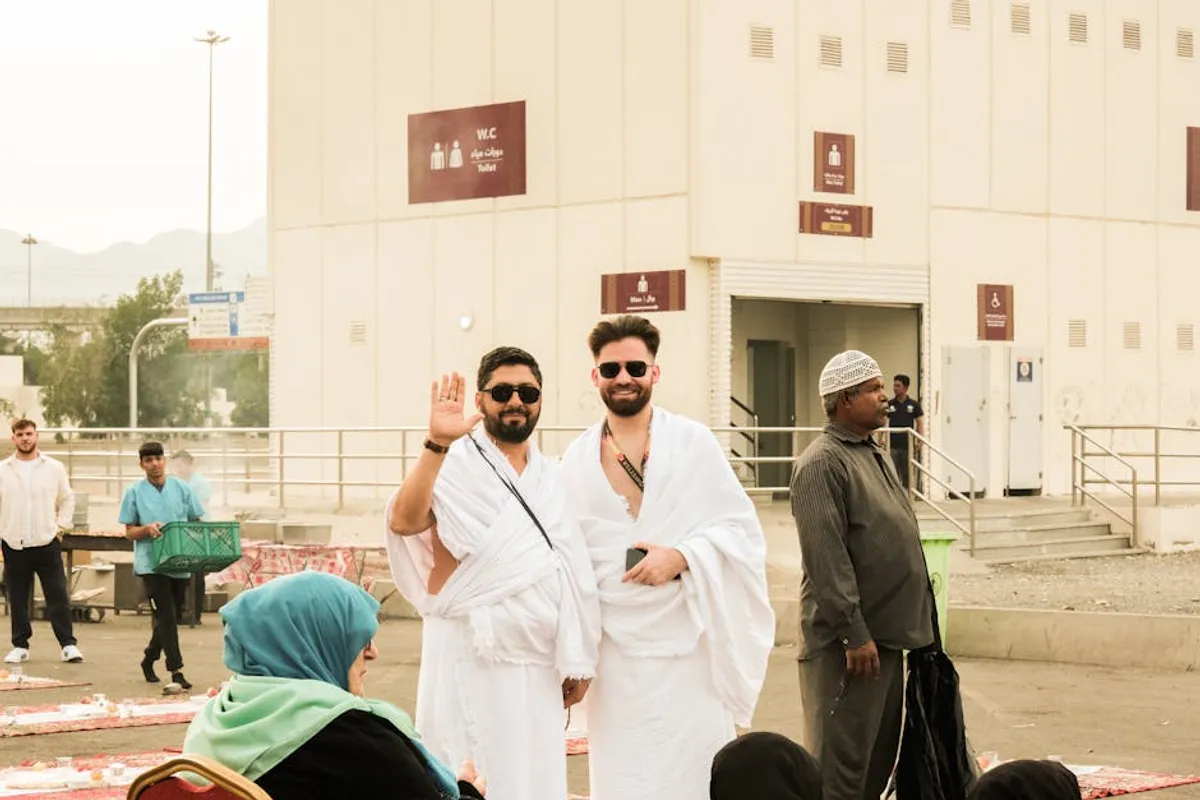
Before entering the sacred precincts of Mecca, pilgrims don specific, simple garments called Ihram. For men, this consists of two unstitched white cloths; for women, it is modest clothing that covers the entire body, leaving only the face and hands exposed. This state signifies purity, humility, and equality before God, shedding worldly distinctions. During Ihram, certain actions are prohibited, such as cutting hair or nails, using perfumes, and engaging in marital relations.
Tawaf: Circumambulating the Kaaba
Upon arrival in Mecca, pilgrims perform the Tawaf, circling the Kaaba (the cube-shaped building in the Grand Mosque) seven times counter-clockwise. This ritual symbolizes the unity of God and the continuous devotion of believers. Each circuit is accompanied by prayers and remembrance of God.
Sa'i: The Walk Between Safa and Marwah
Following Tawaf, pilgrims perform Sa'i, walking rapidly seven times between the hills of Safa and Marwah, located within the Grand Mosque complex. This re-enacts the desperate search for water by Hagar, Prophet Abraham's wife, for her infant son Ishmael, leading to the miraculous discovery of the Zamzam well. It symbolizes perseverance and reliance on God's mercy.
The Day of Arafat: Pinnacle of Hajj
The most crucial day of Hajj is the 9th of Dhul Hijjah, when pilgrims gather on the plain of Arafat, just outside Mecca. They spend the entire day in prayer, reflection, and seeking forgiveness. This "standing before God" is considered the spiritual climax of the pilgrimage, where sins are forgiven, and prayers are answered. Missing this ritual invalidates the Hajj.
Muzdalifah and Mina: Stoning and Sacrifice
After sunset on Arafat, pilgrims proceed to Muzdalifah, collecting pebbles for the symbolic "stoning of the devil" ritual (Ramy) at Mina. The next day, they return to Mina to cast seven pebbles at the largest of three pillars (Jamarat al-Aqaba), symbolizing rejection of evil. This is followed by the Eid al-Adha (Feast of Sacrifice), where an animal is sacrificed, commemorating Abraham's willingness to sacrifice his son. Pilgrims then shave or trim their hair (men shave, women trim) and can exit the state of Ihram, returning to Mecca for a final Tawaf.
Pro Tip: Understanding the sequence and purpose of each ritual is critical for anyone studying the Hajj. The interconnectedness of these acts creates a cohesive spiritual narrative that defines the pilgrimage.
Navigating the Hajj Journey: Practical Considerations
Undertaking Hajj requires meticulous planning beyond spiritual preparation. Governments and travel agencies worldwide facilitate the journey, but pilgrims must be aware of significant logistical challenges.
Logistical aspects include:
- Visa and Permits: Strict regulations govern Hajj visas, issued by Saudi authorities.
- Health and Safety: Pilgrims must be physically fit, often requiring vaccinations. The sheer number of people necessitates robust crowd control and health services.
- Accommodation and Transport: Booking approved accommodations and managing transport between sacred sites (Mecca, Mina, Arafat, Muzdalifah) are complex.
- Financial Planning: Costs associated with travel, accommodation, and food can be substantial.
- Cultural Sensitivity: Adhering to local customs and Islamic etiquette is paramount.
The Saudi government invests heavily in infrastructure to manage the millions of pilgrims, including advanced transportation networks, medical facilities, and sanitation services. Despite these efforts, the scale of the event means pilgrims must be prepared for crowded conditions and potential delays.
The Broader Impact of Hajj
Beyond its religious significance, Hajj has far-reaching economic, social, and political implications. It drives a multi-billion dollar industry annually, impacting travel, hospitality, retail, and telecommunications sectors. For many nations, particularly those with large Muslim populations, managing Hajj quotas and facilitating pilgrimages is a significant administrative undertaking. The return of pilgrims often brings renewed spiritual vigor to their communities, influencing local practices and charitable initiatives. Hajj also serves as a unique global forum, fostering connections and cultural exchange among Muslims from diverse backgrounds.
Frequently Asked Questions about Hajj
When does Hajj take place?
Hajj occurs annually during the Islamic month of Dhul Hijjah, specifically from the 8th to the 12th or 13th day. The Islamic calendar is lunar, so the Gregorian dates for Hajj shift each year.
Who is obligated to perform Hajj?
Every adult Muslim, male or female, who is physically healthy, mentally sound, and financially capable of undertaking the journey without incurring debt or neglecting their dependents, is obligated to perform Hajj once in their lifetime.
Can non-Muslims visit Mecca during Hajj?
No, the city of Mecca and its surrounding holy sites are strictly reserved for Muslims. Non-Muslims are not permitted to enter these areas, especially during the Hajj season.
What is the difference between Hajj and Umrah?
Umrah is a lesser pilgrimage that involves some of the rituals of Hajj (Tawaf and Sa'i) but can be performed at any time of the year. It is not a substitute for Hajj, which is a specific, time-bound obligation with additional rituals like the standing at Arafat.